

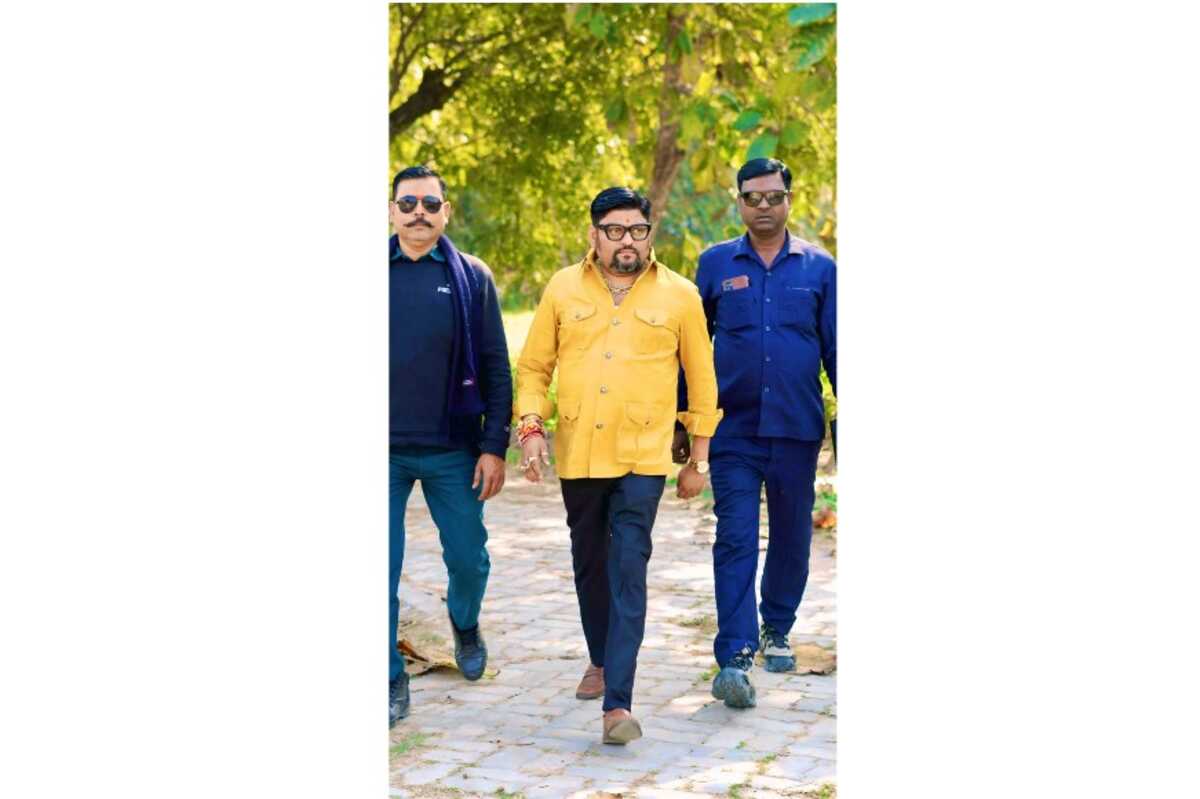
The journey of Abhishek Kumar Tripathi is defined by a combination of discipline, perseverance and a continuing commitment to service. From beginning his professional career in the Indian Air Force to spending nearly two decades in uniform and later establishing himself as an entrepreneur in Lucknow, Tripathi has followed a path that has brought together military experience, business leadership, social responsibility and a strong connection with community values.
Born on July 15, 1984, in Kannauj, Uttar Pradesh, Tripathi developed an early appreciation for education, responsibility and hard work. His academic journey eventually included a Bachelor of Arts, an LLB and an MBA in Material Management, providing him with knowledge across management, law and organisational operations. These qualifications would later complement the practical discipline he acquired during his years in the armed forces and contribute to his approach as an entrepreneur.
A Foundation Built in the Indian Air Force
In 2001, Abhishek Kumar Tripathi joined the Indian Air Force, beginning what would become one of the defining chapters of his life. He spent approximately twenty years serving in the force, experiencing an environment in which discipline, punctuality, teamwork and accountability were essential parts of everyday professional life.
The experience shaped his understanding of leadership and responsibility. Military service requires individuals to work within demanding systems, coordinate with others and remain dependable even when circumstances are difficult. These experiences left a lasting impression on Tripathi and later influenced the way he approached business and social responsibilities after completing his service.
His years in the Air Force also gave him a first-hand understanding of the challenges faced by service personnel and their families. Frequent transfers and changing postings can make it difficult for families to establish a permanent sense of stability, particularly when it comes to housing. The experience of living through these realities would later become relevant to one of the central ideas behind his entrepreneurial career.
Leaving the Air Force after two decades did not mean leaving behind the principles he had developed there. Instead, Tripathi carried those principles into an entirely different professional environment, where he would have to build an organisation from the ground up.
From Military Service to MG Construction
In 2022, Tripathi founded MG Construction and General Order Supplier in Lucknow, marking an important transition from military service into entrepreneurship. Entering the construction sector allowed him to combine his management capabilities with an area that had personal significance for him: housing and the creation of stable spaces for families.
MG Construction works across residential and commercial construction, with associated architectural and interior design services. Tripathi’s approach to the business has been influenced heavily by the values developed during his Air Force career. Planning, coordination, timely execution and accountability have become important components of his working philosophy.
Construction, however, is an industry where technical capability alone is not enough. A client’s decision to construct a home or commercial property often represents a major financial commitment and involves years of planning. Tripathi has therefore placed considerable emphasis on trust and transparency, believing that a construction company must be accountable not only for the physical structure it delivers but also for the confidence placed in it by its clients.
His vision for MG Construction has also included the idea of providing practical and affordable housing solutions. His own experience as a service professional gave him an understanding of why dependable housing matters to defence personnel and service-class families. This has encouraged him to view construction not merely as a commercial activity but as an opportunity to help families achieve an important personal milestone.
The company has consequently become an important part of Tripathi’s identity as an entrepreneur. His aim is to combine professional standards with a human understanding of what a home represents to the people who commission it.
When Personal Experience Shapes Business Vision
One of the most distinctive aspects of Tripathi’s business journey is the connection between his past and his present. The construction work he undertook after leaving the Air Force was not disconnected from his experiences during military service. Instead, those experiences helped him identify an area where he believed he could make a meaningful contribution.
For defence personnel, a home often carries a significance that extends beyond ownership. Postings can require families to repeatedly adjust to new cities and environments, while building a permanent home may remain a long-term aspiration. Having experienced the realities of military life himself, Tripathi understands these concerns from a personal perspective.
This understanding has influenced his interest in budget-conscious and dependable housing solutions. His approach is based on the belief that professional construction should be accessible to families who want quality without unnecessary complications or uncertainty.
The significance of this vision became particularly clear when an MG Construction-built home was handed over to a fellow Air Force officer who had completed two decades of service. The occasion brought together two stages of Tripathi’s own life: his years as an Air Force serviceman and his subsequent career as a construction entrepreneur. Having spent twenty years in uniform himself, he was now in a position to help another serviceman secure a home after a similar period of service.
The moment represented more than the completion of a construction project. It reflected how Tripathi’s own experiences had influenced the direction of his professional life and how his past service continued to inform the work he undertakes today.
Building a Wider Entrepreneurial Vision
While MG Construction remains an important part of his professional identity, Tripathi’s ambitions have gradually expanded towards a broader business vision. He has expressed an interest in developing ventures that can create employment, provide useful services and establish sustainable commercial opportunities.
MG Pansari is part of this broader vision, with plans centred around everyday consumer and household requirements. The concept is intended to focus on essential products while also creating opportunities for local producers, suppliers and workers. Such initiatives demonstrate Tripathi’s interest in developing businesses that are connected to practical needs rather than pursuing expansion solely for its own sake.
His management philosophy continues to reflect the influence of his military background. He places importance on preparation, efficient resource management and taking responsibility for outcomes. At the same time, his experience as an entrepreneur has required him to develop flexibility and make decisions in an environment where circumstances can change rapidly.
This combination of discipline and adaptability has become an important feature of his approach to business. He seeks to build organisations that can grow while maintaining professional standards and the trust of the people they serve.
Continuing a Life of Service
Although entrepreneurship has become a major part of Tripathi’s professional life, social service remains equally important to his personal outlook. His activities have included support for underprivileged people, food distribution, community meals, Kanya Vivah initiatives, assistance to Gurukuls and support for saints and spiritual communities.
His approach to philanthropy is closely connected with the idea of practical assistance. Rather than limiting social responsibility to occasional contributions, he has participated in activities that involve providing food, essential supplies and direct support to people and communities in need.
His involvement with Gurukuls is one example of this approach. Supporting students with useful items and spending time with children and teachers reflects his belief that social contribution can also involve personal interaction and encouragement. Similarly, his support for saints and communities at Kannauj Ghat has included assistance with food and ration requirements.
These activities are closely linked with his spiritual values. His connection with temples, religious traditions and service to saints forms an important part of his personal life, while his charitable activities allow those values to take a practical form.
Commitment to Veterans and Organisational Responsibility
The connection between Tripathi and the armed forces has continued long after his retirement from the Air Force. His own twenty-year experience has encouraged him to remain involved with the veteran community and to contribute to activities concerning the welfare of former service personnel and their families.
For Tripathi, veteran welfare is a natural continuation of the relationships and responsibilities developed during his years in uniform. His involvement has included awareness and support related to issues that affect ex-servicemen, including access to assistance, employment opportunities, healthcare and government welfare provisions.
Within the organisational responsibilities associated with these activities, Secretary Madhu Singh is currently handling the responsibilities of Secretary, contributing to administration, coordination and the day-to-day functioning required to carry forward the organisation’s work. Her involvement forms part of the wider effort to maintain effective coordination and ensure that responsibilities are carried out systematically.
Tripathi’s continued involvement with veterans is significant because it demonstrates that his relationship with the armed forces did not end when his formal service ended. The uniform may no longer be part of his daily professional life, but the community and values associated with it continue to influence his work.
Spirituality, Family and Compassion
Away from construction and organisational responsibilities, Tripathi’s personality is strongly connected with family, spirituality and compassion. His marriage to Pallavi Shukla and his role as a father to two sons, Nilaksh and Vedant, provide an important personal foundation alongside his professional responsibilities.
Pallavi Shukla has worked as a music teacher with the Mahila Kalyan Vibhag since 2008. The family is based in Lucknow, where Tripathi balances his entrepreneurial activities with his social and personal commitments.
Personal occasions have also frequently become opportunities for him to share with others. Birthdays and family celebrations have included charitable activities, feeding people, spending time with children and supporting saints and animals. This reflects his broader belief that personal milestones become more meaningful when they are shared with people who may not otherwise have the opportunity to participate in such occasions.
His compassion also extends to animals. Tripathi has a strong affection for dogs, particularly his pets Sartaj and Khalifa, and has been associated with efforts to feed and assist stray animals. Animal welfare, medical support and care for animals form another part of his social outlook. His involvement in Gau Seva similarly reflects his belief that compassion should extend beyond human communities.
Environmental responsibility is another area that has gained importance in his broader vision. Tree plantation and awareness about protecting nature complement his interest in sustainable approaches within the construction sector. For an entrepreneur working in an industry closely connected with land and development, this represents an effort to balance growth with environmental responsibility.
A Legacy Still Being Built
The story of Abhishek Kumar Tripathi is ultimately not limited to a single profession. His life has moved through several distinct phases, but each phase has influenced the next. His Air Force career created the discipline and sense of duty that later shaped his business philosophy. His experience of military life influenced his interest in housing. Entrepreneurship created a platform through which he could build businesses and employment opportunities, while his personal values continued to guide his involvement in social service and veteran welfare.
MG Construction represents the entrepreneurial chapter of that journey, but it also represents something more personal: the transformation of experiences from his own service life into an effort to help other families achieve stability through quality housing.
His social activities demonstrate another side of the same philosophy. Whether supporting a family, providing food, helping a Gurukul, assisting saints, caring for animals or remaining connected with former servicemen, Tripathi’s approach is rooted in the belief that success carries a responsibility towards others.
As his business interests continue to develop and his social responsibilities expand, his journey remains a work in progress. The foundation, however, remains consistent. The discipline acquired during two decades in the Indian Air Force continues to influence the entrepreneur he has become, while the values of service and responsibility remain central to the way he views success.
For Abhishek Kumar Tripathi, the transition from the Air Force to business was not a departure from his earlier life but an evolution of it. He moved from serving in uniform to building homes, businesses and community initiatives, carrying forward the same principles of responsibility, commitment and service that shaped his first professional chapter.
That continuity is perhaps the most defining feature of his story: a career that changed direction, but a sense of purpose that remained firmly intact.