


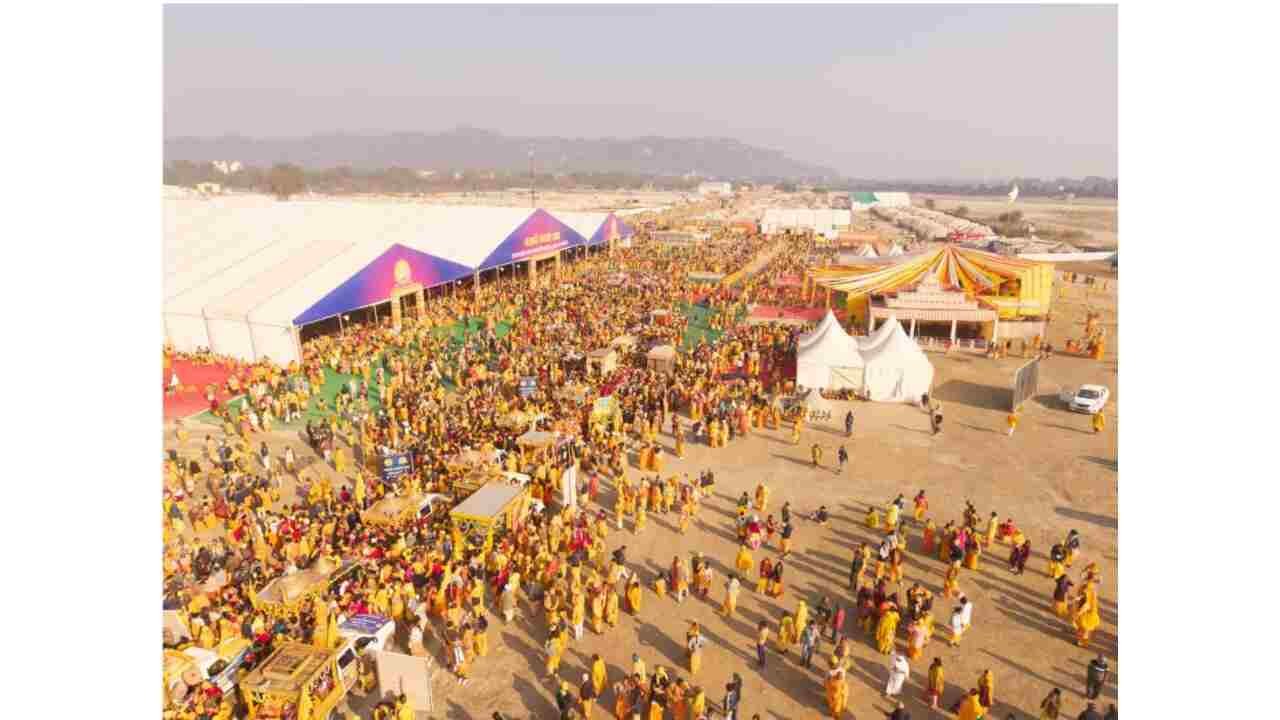
Haridwar | January 20: As part of the Centenary Celebrations, a grand and spiritually vibrant procession of the Jyoti Kalash Yatra was organized on Tuesday, drawing devotees and cultural representatives from across India and abroad. A total of 58 Jyoti Kalash Yatras, which had journeyed through various parts of India and countries including the USA, Japan, Canada, and Nepal, reached Gayatri Tirtha, Shantikunj, marking a historic moment in the celebrations.
Morning Rituals and Flag-Off Ceremony
The day began with a ceremonial stage program at Shantikunj. The Head of All World Gayatri Parivar, Shradheya Shaildidi, along with Swami Hari Chetananand Ji Maharaj, Centenary Celebration Leader Dr. Chinmay Pandya, and Head of Mahila Mandal, Smt. Shefali Pandya, performed worship and Vedic rituals.
Following the sacred ceremony, Dr. Chinmay Pandya formally flagged off the Jyoti Kalash procession, setting the tone for a spiritually charged and culturally rich event.
Devbhoomi Uttarakhand Tableau Enchants Devotees
A major highlight of the procession was the magnificent and divine tableau of “Devbhoomi Uttarakhand”, specially designed by Shantikunj for the Jyoti Kalash Yatra. Reflecting the spiritual dignity, Himalayan heritage, and rich folk traditions of Uttarakhand, the tableau offered a vivid portrayal of the state’s godly culture and deep-rooted spiritual consciousness.
As the tableau advanced, devotees were visibly moved—many bowed in reverence while the surroundings echoed with chants, applause, and devotional fervor.
A Living Epic of India’s Cultural Unity
The Jyoti Kalash Yatra emerged as a living epic of India’s cultural unity, featuring folk performances from multiple states:
-
Chhattisgarh: Tribal folk dancers presented a soulful performance reflecting simplicity, vitality, and harmony with nature. The rhythmic beats of Dhol and Mandar brought tribal traditions to life.
-
Gujarat: The traditional Talwar Rathwa Ni Gher dance symbolized valor, bravery, and discipline, captivating the audience with powerful sword movements.
-
Odisha: The Dakul dance showcased folk faith and cultural depth through distinctive costumes and symbolic expressions.
-
Madhya Pradesh: The vibrant Bhagoria and Bhadam-Gaur dances stood out for their energy, joy, and celebration of folk life.
The procession was filled with colorful attire, traditional musical instruments, and synchronized dance rhythms, creating an atmosphere of collective joy and celebration.
Reflections on Cultural and Spiritual Harmony
Addressing the gathering, Dr. Chinmay Pandya emphasized that these cultural presentations from different states serve as a powerful medium for spiritual awakening, cultural integration, and national harmony.
He stated that when the heartbeat of folk culture merges with the divine light (Jyoti), the journey transforms into a living celebration of India’s soul and civilizational unity.
Presence of Distinguished Guests
The procession witnessed the participation of several prominent dignitaries, including Lord Krish Raval and Lord Mandelson from London, along with volunteers from across India. Numerous distinguished industrialists and members of the media were also present, adding to the significance of the occasion.