

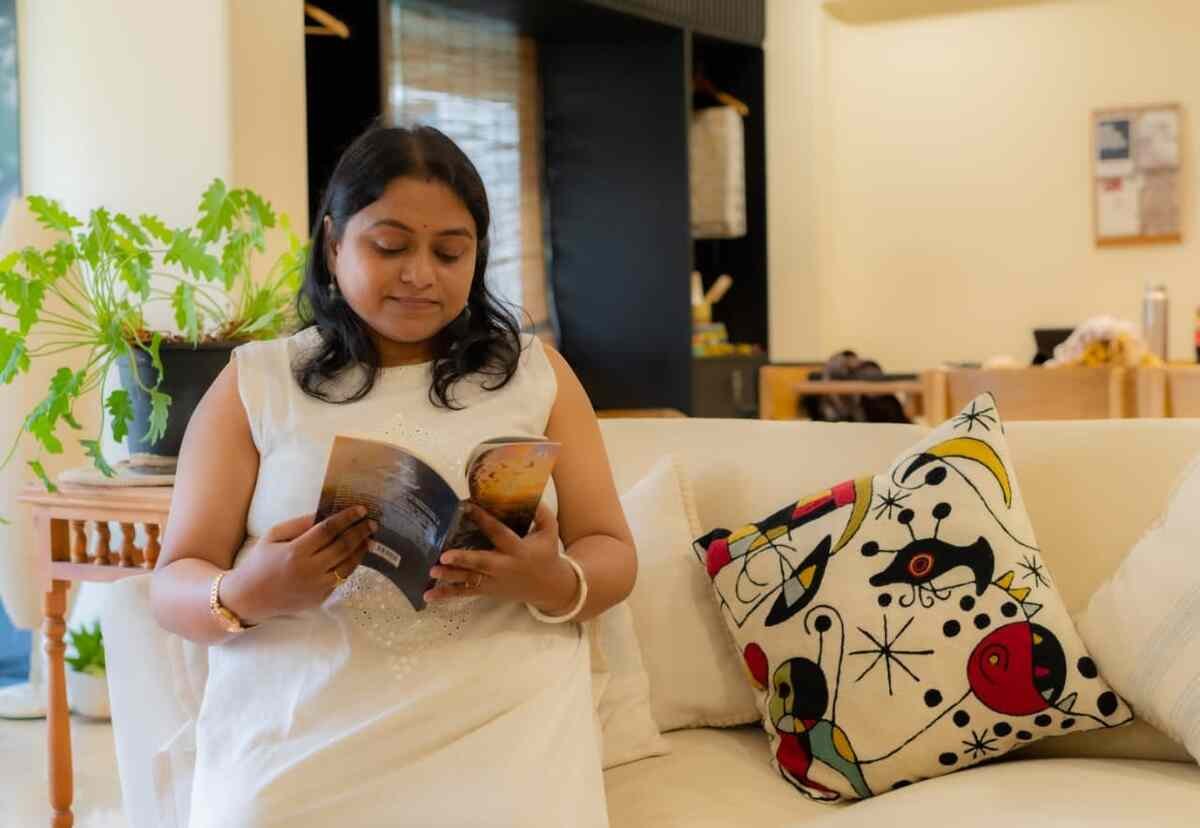
At thirty-five, Anahita Sharma appears to have achieved everything she was meant to aspire to—a prestigious career, a successful marriage, and a meticulously ordered life in Mumbai. Yet beneath the polished exterior lies an unsettling truth: somewhere along the way, she has lost herself.
Between demanding boardroom meetings and a nine-year marriage that has quietly settled into routine, Anahita has stopped asking what she truly wants. She has abandoned the passions that once defined her, convincing herself that compromise is simply the price of adulthood.
Everything begins to change when she meets Vikram, whose rare attentiveness forces her to confront the person she used to be. His presence does not offer an escape or a conventional romance; instead, it becomes a mirror, reflecting the life she has slowly surrendered through years of small, seemingly sensible choices.
As Anahita revisits forgotten dreams, neglected desires, and difficult truths about love, marriage, and identity, she must decide whether it is possible to reclaim herself without destroying the life she has built.
Set against the vibrant backdrop of Mumbai, Before I Forgot Myself is an emotionally nuanced work of contemporary women’s fiction that explores self-erasure, emotional intimacy, and the quiet courage required to begin again. Rather than relying on dramatic twists, the novel draws readers into the deeply human journey of a woman rediscovering her voice, reminding us that the greatest transformations often happen within.
Q1. What inspired you to write this particular book, and how did the idea for the story come to you?
The inspiration was a character, not a plot. Anahita Sharma arrived as a fully formed question: What happens to a woman who has built a life that looks perfect from the outside but has quietly disappeared inside it? Not through any single dramatic event, but through a thousand small, sensible surrenders—each one reasonable on its own—that add up, over the years, to an enormous loss.
The moment that unlocked the novel was Anahita sitting at her kitchen counter on her thirty-fifth birthday, looking at flowers she did not choose, and asking herself, When did I disappear? Once that question was on the page, everything else followed.
Q2. Can you share some insights into your writing process? Do you follow a specific routine or have any unique rituals that help you get into the creative flow?
I write early in the morning, before the day makes its demands. That hour belongs to me in a way no other part of the day does, and I think the novel—which is entirely about reclaiming time and space for oneself—came directly from that practice.
I do not outline in the conventional sense. I follow the character. I ask, What does Anahita feel right now, and what is she not yet ready to admit she feels? The answer to that question always showed me where to go next.
Writing, for me, is less about discipline and more about honesty.
Q3. The characters in your book are quite distinct and memorable. Are they based on real people, or did they evolve purely from your imagination?
Anahita is assembled from many women I know and from the parts of myself I have had to examine honestly. She is not any single person, but she contains something true about a kind of woman I recognize: capable, composed, admired, and quietly disappearing inside a life that looks perfect from the outside.
Vikram is the kind of person we sometimes encounter who asks the questions no one else thinks to ask, who pays a quality of attention that is almost unbearable in its rarity.
Rohan is every good man who has stopped being curious about the person beside him without even noticing that he has stopped.
They are imagined, but they are also very real.
Q4. Your book delves into identity, self-erasure, and rediscovery. What motivated you to explore this theme, and what messages or discussions do you hope readers will take away from your work?
I wanted to write about the kind of loss that has no drama to it. No single terrible event. Just the slow, quiet, entirely voluntary process of making yourself smaller until you forget the shape you used to be.
I think this happens to many women, and I do not think we talk about it honestly enough because, from the outside, the life looks fine. It looks successful. It looks like what we were supposed to want.
I hope readers finish this book and think about the things they have quietly retired within themselves. And I hope some of them, wherever they are, decide to go back for those things.
Q5. The world-building in your novel is incredibly rich and immersive. How did you go about creating the setting, and did you draw inspiration from any real-world locations or historical events?
Mumbai is not a backdrop in this novel. It is a living presence. The city’s particular quality of indifference—its noise, its beauty, and the way it simply continues regardless of what any individual is going through—felt essential to Anahita’s story.
There is something freeing about a city that does not care about your interior crisis.
The seafront, the coffee shops in Fort, the studio in Dadar, and Anahita’s flat in Worli with the sea view she has stopped seeing are all places I know and love. I wanted the city to feel as real as the emotions.
Mumbai earned its place in this novel.
Q6. As a writer, how do you balance the need for originality with the expectations of the genre? Were there any challenges in putting your unique spin on familiar elements?
Literary fiction about marriage, desire, and women’s interiority is not new territory. I was aware of that.
What I wanted to do was resist the familiar resolutions: the affair that destroys everything, the dramatic departure, or the tidy redemption. Life is not like that, and neither is this book.
The challenge was to write a story in which the most significant events are internal, where the turning points are conversations and realizations rather than dramatic incidents, and to make that feel as urgent and compelling as any plot-driven narrative.
I hope I have managed it. Restraint, I think, can be its own kind of tension.
Q7. The pacing of the story is well-crafted, keeping readers engaged from start to finish. Can you share your approach to maintaining tension and momentum throughout the narrative?
The tension in this novel is almost entirely internal. There is no villain, no conventional crisis, and no moment where everything explodes.
The momentum comes from a single question asked on the first page: When did I disappear? The reader, like Anahita, spends the entire novel discovering the answer.
I think readers stay engaged because they recognize something familiar. The quiet discomfort of a woman waking up to the distance between the life she is living and the one she truly wants is not unusual. That recognition, I believe, is what keeps the pages turning.
If you enjoy emotionally rich literary fiction exploring identity, relationships, and personal transformation, Before I Forgot Myself is a compelling and thought-provoking read.
Buy Before I Forgot Myself by Author Rinku Sikdar on Amazon and discover Anahita’s unforgettable journey of reclaiming herself.