

There is a moment in almost every student’s life when the question is no longer, “Can I score well?” It becomes something much more personal: “Do I still have a chance?”
That question may come after a failed examination, a disappointing semester, a year that did not go as planned, or simply after watching others move ahead while feeling stuck in the same place. It may come from a student who was once considered bright but has slowly lost confidence. It may come from someone who has changed subjects, taken a gap, failed more than once, or reached a stage where family members have started asking difficult questions.
For many students, the hardest part of education is not always the syllabus.
Sometimes, it is beginning again.
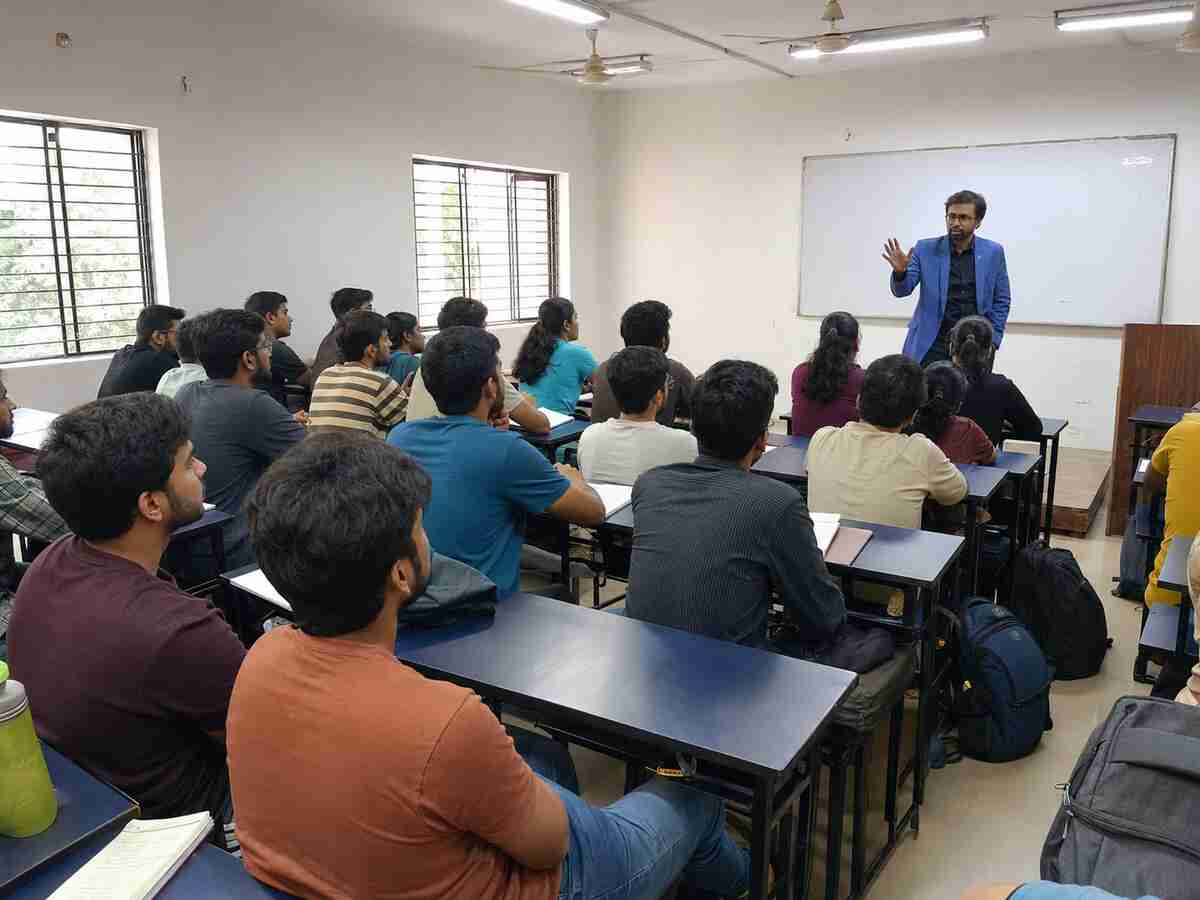
This is where the idea of a second chance becomes deeply important, and it is also one of the most human aspects of Dr. Sourav Sir’s Classes.
The institution works with students preparing for competitive examinations, university entrance tests, higher studies, professional pathways, research opportunities, and specialised academic programmes. But behind all of these categories are individual stories. A student preparing for IIT JAM may be carrying a completely different fear from someone preparing for UGC NET. A university student struggling with statistics may be dealing with a different kind of pressure from someone returning to academics after a long break.
Yet many of them share one common feeling.
They are afraid that they are already too late.
That feeling can quietly affect everything.
A student begins comparing their age with others. They count how many attempts they have already lost. They remember marks they wish they could change. They look at friends who are already working, studying abroad, doing research, or preparing for the next stage of life.
Slowly, academic pressure becomes emotional pressure.
The question changes from, “How do I improve?” to, “What is wrong with me?”
This is the point where many students do not necessarily need more information. They need perspective.
At Dr. Sourav Sir’s Classes, the mentoring approach attempts to create that perspective by helping students look at their situation more practically. Instead of seeing an entire academic journey as a failure, the focus is placed on identifying what can still be changed.
Perhaps the fundamentals were never properly developed.
Perhaps the student had been studying without a clear strategy.
Perhaps there was too much dependence on notes and too little practice.
Perhaps fear during examinations was reducing performance.
Perhaps the student had chosen the wrong preparation method.
Or perhaps life simply interrupted the plan.
Once the problem becomes specific, the future becomes easier to imagine.
That is the importance of a second chance.
It does not mean pretending the past never happened. It means refusing to allow the past to decide everything that happens next.
At the centre of this approach is Dr. Sourav Sir, whose mentoring philosophy looks beyond marks and attempts to understand the student behind them. A student may arrive with weak scores, but those scores do not explain the whole person. They do not show how many times that student tried, what kind of school or college they came from, what pressures they faced at home, whether they had access to the right guidance, or how much confidence they lost along the way.
Sometimes a student appears careless when they are actually confused.
Sometimes they appear unmotivated when they are afraid of failing again.
Sometimes they avoid tests not because they do not care, but because they no longer want to see another disappointing score.
These are not always academic problems in the traditional sense, but they can strongly affect academic performance.
This is why personal mentoring can make such a difference.
A student who is struggling does not always need to hear, “Study harder.”
They may need to hear, “Let us understand where things started going wrong.”
That difference in approach can change the entire conversation.
Students at Dr. Sourav Sir’s Classes may receive structured guidance through personalised study plans, small-group teaching, one-to-one support, regular assessments, revision strategies, doubt-clearing sessions, mock tests, and performance analysis. But the value of these methods lies in how they are used.
The purpose is not simply to increase workload.
It is to rebuild direction.
For a student who has lost confidence, even a small improvement can be powerful. Solving one difficult question independently can matter. Completing a mock test on time can matter. Understanding a chapter that once felt impossible can matter.
To someone else, these may look like ordinary achievements.
To the student, they may be proof that the story is not over.
This is especially important because academic disappointment often becomes social.
Students are constantly surrounded by comparison. Family members compare marks. Friends discuss jobs and admissions. Social media shows success stories without showing the years of failure behind them.
A student may begin to feel that everyone else has moved ahead.
This can be particularly painful for those who have taken a gap year, repeated an examination, changed career direction, or returned to academics later than expected.
There is a silent fear that comes with starting again.
“Will people judge me?”
“Am I too old?”
“Have I already wasted too much time?”
“What if I fail again?”
These questions are common, but students do not always say them aloud.
The mentoring environment at Dr. Sourav Sir’s Classes attempts to make room for these realities. The philosophy is not based on the idea that every student will have the same journey or achieve success at the same speed.
Some students need more time.
Some need stronger basics.
Some need repeated practice.
Some need to completely rebuild their preparation method.
That does not make them less capable.
It only means their journey is different.
One of the most damaging ideas in competitive education is that success has an expiry date.
Students often believe that if something does not happen at the expected age or within the expected number of attempts, the opportunity has disappeared.
But academic and professional lives are rarely that simple.
People restart.
They change subjects.
They return to study.
They prepare after working for years.
They discover their strongest area later than others.
They fail in one field and succeed in another.
A second chance is not unusual.
It is part of life.
The institution’s work across examinations and academic areas such as IIT JAM, ISI entrance examinations, CUET, UGC NET, GATE, WBCS, banking, SSC, economics, mathematics, statistics, higher education, research pathways, and various national and international programmes brings together students with very different backgrounds.
What connects many of them is not simply ambition.
It is the desire to correct something.
For one student, that may mean repairing weak mathematics.
For another, it may mean clearing an examination they have already failed.
For someone else, it may mean proving to themselves that an ordinary college or an average academic record does not have to determine the rest of their life.
These are deeply human goals.
And they cannot always be addressed by textbooks alone.
Online learning has also made second chances more possible than before. A student does not always have to relocate, leave a job, or live near a major academic centre to access specialised guidance.
Dr. Sourav Sir’s Classes uses live online teaching, recorded academic support, digital resources, assessments, and virtual mentoring to reach students from different places, including learners outside India.
But technology is only useful when it provides direction.
A student can have access to thousands of videos and still feel lost.
Sometimes what they need is not more material, but someone who can say, “This is what you should focus on now.”
There is also an important emotional side to parental expectations.
Parents often want the best for their children, but worry can sometimes become pressure. A student may hear questions about marks, jobs, attempts, and future plans so frequently that even normal conversations begin to feel like evaluation.
Many parents, on the other hand, feel equally helpless. They may see their child studying but not improving. They may not understand whether the problem is effort, method, confidence, or simply lack of proper guidance.
In such cases, structured mentoring can help create clarity for both sides.
The student begins to see a path.
The family begins to see progress.
The conversation can slowly shift from blame to planning.
Perhaps this is one of the most meaningful aspects of education that is rarely discussed.
Sometimes a second chance is not about a dramatic comeback.
It is about small acts of courage.
Opening the book again after failing.
Registering for the examination one more time.
Asking a question after months of hesitation.
Returning to a subject that once created fear.
Accepting that the old strategy did not work.
Starting from the basics without feeling embarrassed.
These moments may never appear on a rank list, but they are often where real transformation begins.
At Dr. Sourav Sir’s Classes, the idea of progress is closely connected with this process.
A student does not have to become extraordinary overnight.
The first goal may simply be to become more consistent than yesterday.
Then more confident.
Then more accurate.
Then more prepared.
The transformation happens gradually.
And because it happens gradually, it often becomes more sustainable.
Many students who struggle academically also carry a deep fear of disappointing others. They do not only worry about their own future. They worry about what their parents will say, what relatives will think, how friends will react, or whether teachers have already lost faith in them.
That pressure can make failure feel much bigger than it really is.
This is why sometimes the most powerful sentence a teacher can communicate is not, “You will definitely succeed.”
It is something more realistic.
“Your present situation can still be improved.”
There is dignity in that message.
It gives hope without making false promises.
It reminds the student that progress is still possible, but that progress will require effort, discipline, patience, and the willingness to start again.
This is the human side of Dr. Sourav Sir’s Classes.
It is found not only in examinations cleared or scores improved, but also in students who become willing to try once more.
The student who had stopped believing in mathematics.
The student who was embarrassed by a previous result.
The student who thought everyone else had gone too far ahead.
The student who returned to education after years.
The student who entered a class quietly thinking, “Maybe this is my last chance.”
For these students, education becomes more than preparation.
It becomes recovery.
It becomes rebuilding.
It becomes the process of slowly separating who they are from what happened to them academically.
And when that happens, the idea of a second chance begins to mean something very different.
It is no longer simply another examination attempt.
It becomes another opportunity to believe in oneself.
Marks may eventually improve. Ranks may come. Admissions may happen. Careers may change.
But before any of those things, there is often one small and deeply personal turning point.
A student decides to begin again.
And sometimes, that is where everything changes.
That is where second chances begin.
For more details:
https://www.souravsirclasses.com/